

Practicing
STEADINESS
What is Steadiness?

Steadiness helps a leader perform from a more grounded energy. Leaders who embody steadiness bring stability, discipline, and self-awareness to their interactions at work. Rather than reacting impulsively to challenges, they respond with intention. They recognize their emotional triggers, establish healthy boundaries, and focus on what matters most.

Steadiness is contagious.
Why Does it Matter?
Today's workplace demands that people navigate constant pressure, change, and uncertainty. In this environment, Steadiness becomes a key differentiator.
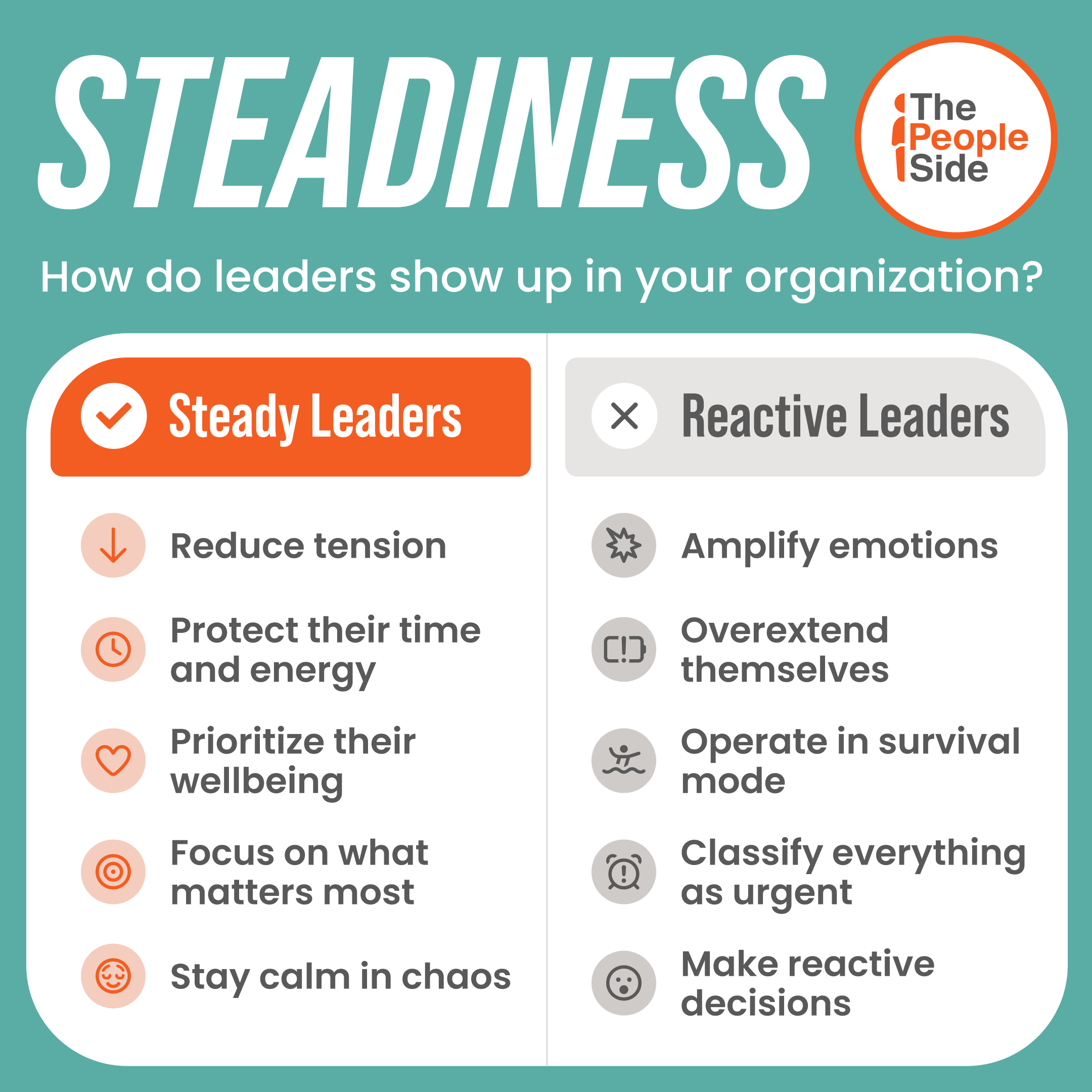
Steadiness is contagious. When leaders create calm amid complexity, regulate their emotional energy, and remain grounded, they set the tone for how teams approach challenges, make decisions, and manage priorities.
The opposite is also true. When leaders treat everything as urgent, neglect their well-being, or lack self-awareness, they create an environment that is reactive and overwhelmed.
Strong organizational performance depends on people who can think clearly, adapt effectively, and perform consistently. Steadiness creates the conditions that make this possible. And it's an energy that can be developed and strengthened through intentional practice.
Do you want to encourage Steadiness within your leaders and teams? Explore our resources below.
Watch This
A conversation about why steadiness matters now — and how leaders can cultivate it in themselves and others.
Read This
From The People Side
Challenging Toxic Resilience
Companies that encourage “toxic resilience” generate a sneaky liability. How can people stay engaged, make sound decisions, and demonstrate a steady presence, when they are exhausted, reactive and overwhelmed? They can’t. They don’t. Leaders must challenge the assumption that “pushing through” is the goal and intentionally define a more sustainable version of resilience for themselves and their teams.
From Harvard Medical School
Understanding the stress response
Chronic stress is a reality for many. But, if you want to bring a more steadying energy to your team, it is important to understand and manage how your brain responds to stress.
From Forbes
Urgency Addiction in Leadership
Speed vs. progress in the age of AI: Does AI add an accelerant to your urgency addiction? Does the technology have a positive or negative effect on the quality of decisions that are being made by people and the lack of steadiness we feel at work?
Practice This
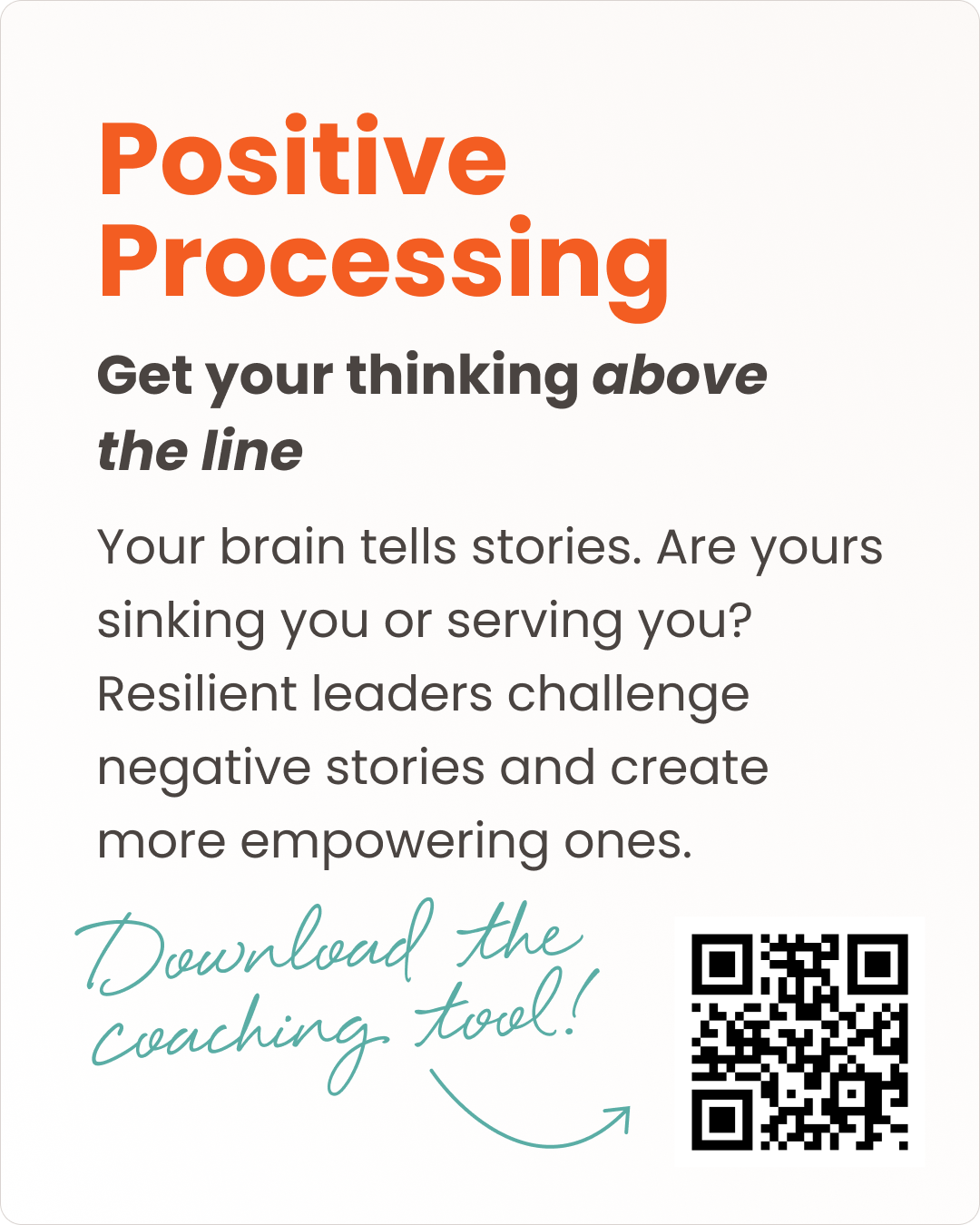
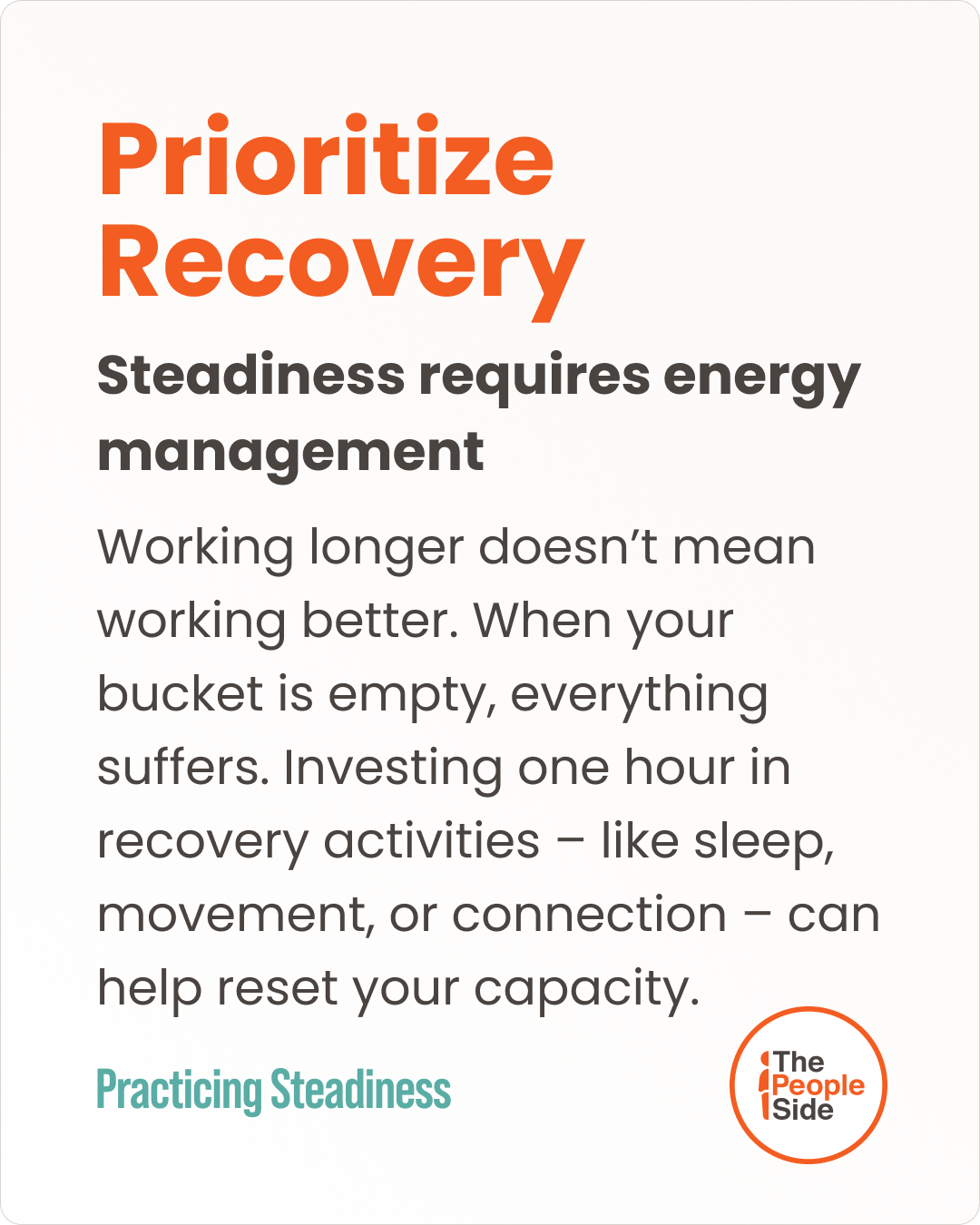
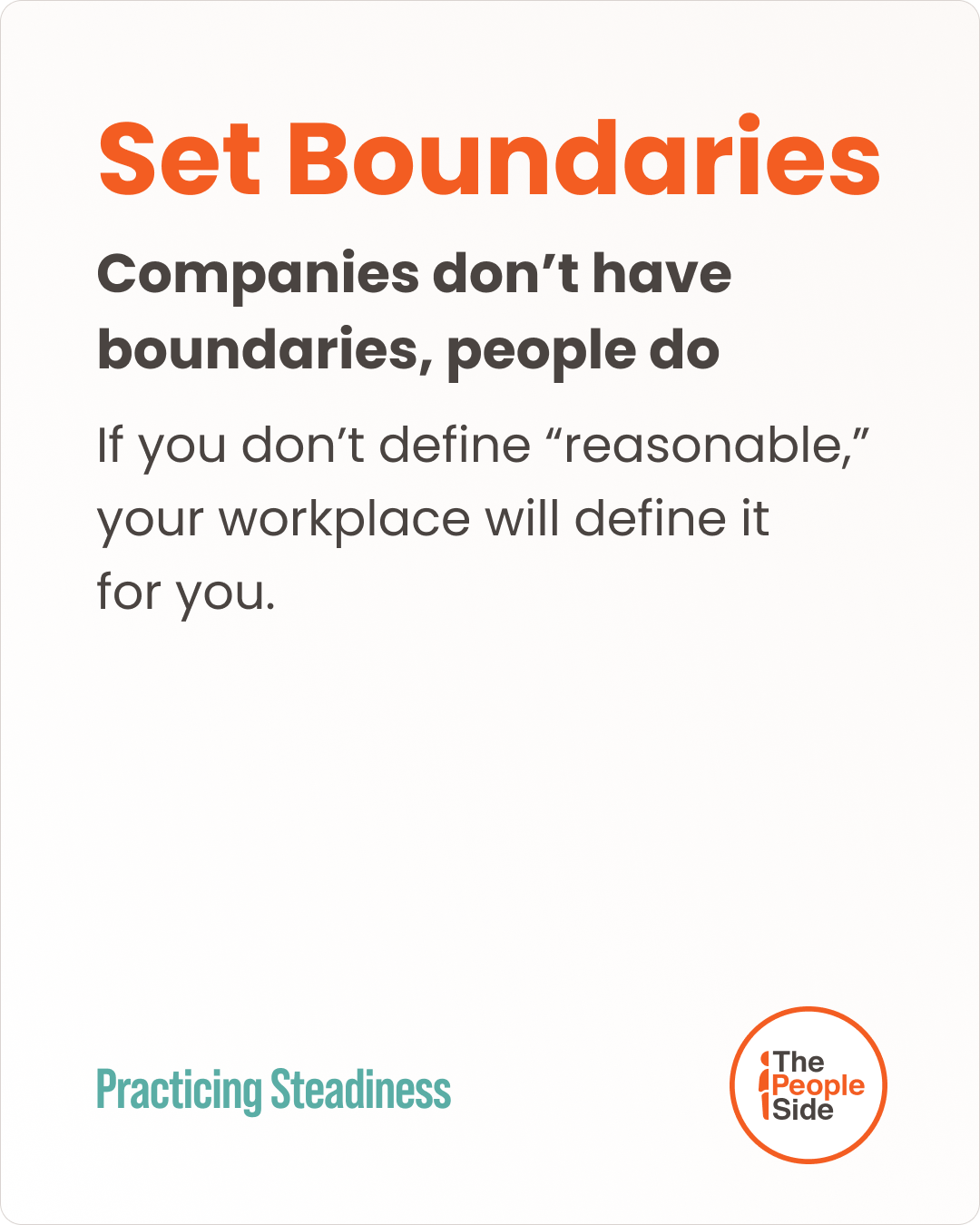
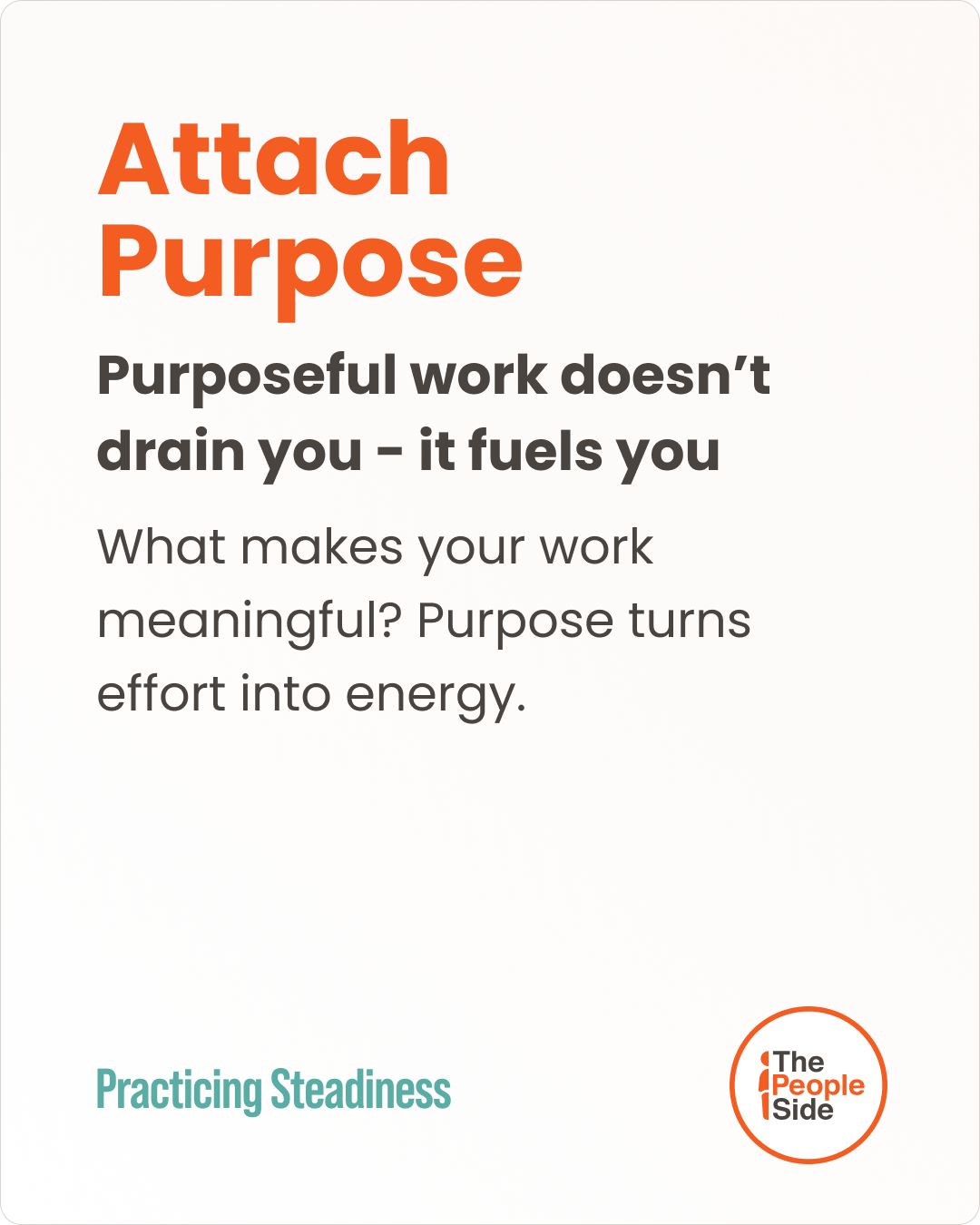


Other Energies of Leadership
-
![Steadying energy icon — figure balancing on a seesaw]()
Steadying
Create calm amidst complexity. Regulate your energy and help others feel grounded and focused.
-
![Connecting energy icon — two figures high-fiving]()
Connecting
Build trust and alignment. Strengthen the relationships that help teams work well together.
-
![Cultivating leadership energy: a person watering two seedlings.]()
Cultivating
Grow people over time. Give each person the conditions, support, and opportunities they need to thrive.
-
![Illustration of the Exploring leadership energy, represented by a person looking through binoculars.]()
Exploring
Look ahead and imagine what’s possible. Stay curious, seek new perspectives, and discover fresh paths forward.



Want to Create Real Change?
Invest in leadership development experiences that push past conventional training programs. Let us help you foster the mindsets and skillsets of future-ready leaders!